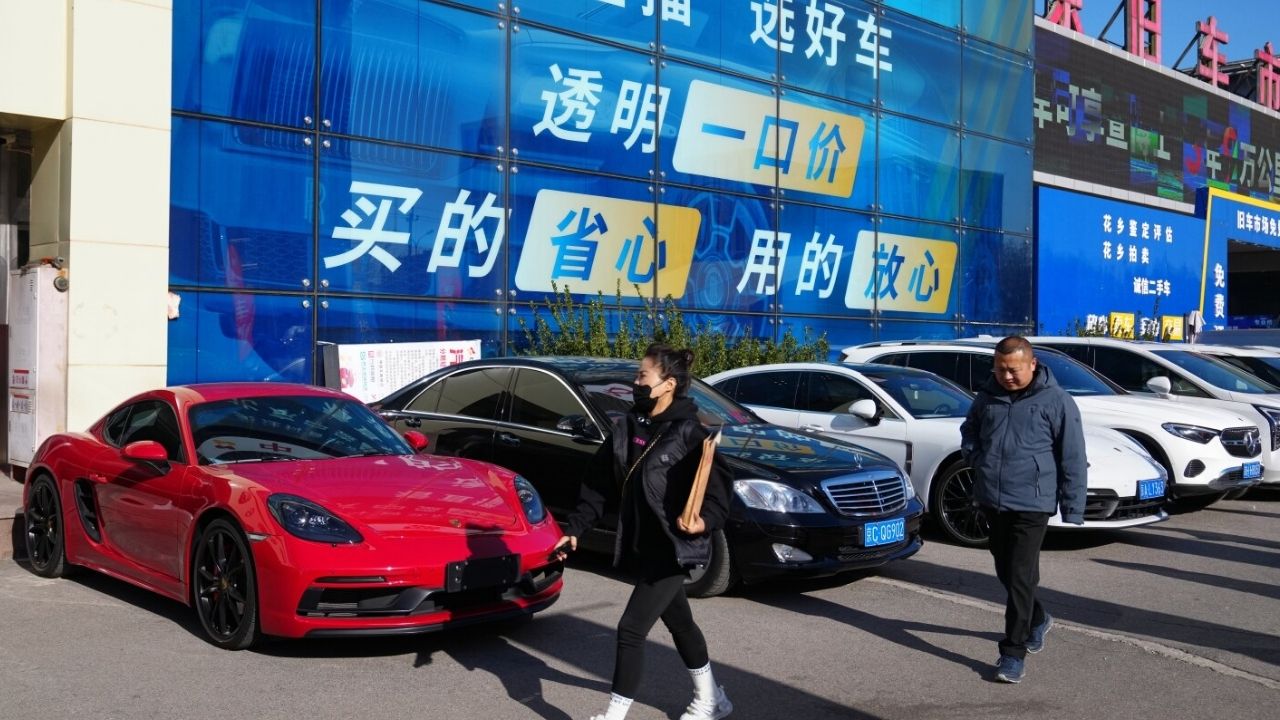
China’s car market is going through a visible change. Demand for foreign luxury vehicles is weakening, while more buyers are choosing affordable domestic models that offer strong technology, high comfort, and aggressive pricing. This shift is creating pressure for European and other imported premium brands that once dominated the top end of the world’s largest auto market.
The change is not happening for a single reason. It is being driven by economic conditions, consumer psychology, government policy incentives, and intense competition from Chinese automakers that are moving fast with new electric and hybrid products. Together, these forces are reshaping what Chinese buyers consider a smart purchase, especially in a period where large discretionary spending is being approached more carefully.
What is changing in the Chinese auto market
For years, China was the growth engine for many global luxury brands. Premium imports were seen as both aspirational and a marker of success. Now, that demand is cooling. Many customers are choosing domestic brands that provide a high feature experience at a lower cost, often supported by heavy discounts.
A major reason domestic cars are winning is value perception. Buyers increasingly prioritize large screens, smart electronics, cabin comfort, and modern driver assistance features. Chinese brands have built a strong reputation for offering these at prices that are difficult for imported brands to match, particularly when local brands also discount aggressively to gain share.
At the same time, the foreign luxury proposition is becoming harder to justify for a wider pool of consumers. When overall confidence is lower, buyers become more cautious and compare what they get for every yuan spent.
Short summary table
Category |
Details |
|---|---|
Key market shift |
Buyers moving from foreign luxury imports to lower priced domestic brands |
Main drivers |
Economic slowdown, property downturn, changing attitudes toward visible wealth |
Policy impact |
Trade in subsidy encourages EV and plug in hybrid buying, especially lower priced models |
Competitive pressure |
Chinese brands pushing fast tech updates and major price cuts |
Premium share trend |
Premium car share has started declining after years of growth |
Brand impact |
Pressure on Mercedes Benz, BMW, Porsche, Aston Martin, Ferrari and others |
Official site link |
Economic pressures and the property downturn effect
A prolonged property downturn has weighed on consumer sentiment. When property values are under pressure and households feel less confident about the future, large purchases tend to be delayed. Even customers with strong incomes can become more conservative in what they choose to buy, particularly for items that are easily postponed.
This shift is also connected to social behavior. As uncertainty rises, some buyers become less comfortable with public displays of wealth. In that environment, choosing a less conspicuous car can feel safer socially, even for high earning consumers. The result is fewer buyers willing to pay premium prices for imported luxury models simply for status.
How subsidies are influencing purchase decisions
Government trade in incentives for electric and plug in hybrid purchases are another powerful factor. When buyers receive a fixed subsidy amount, the discount has a bigger impact on total cost when the car itself is lower priced. That naturally pushes many consumers toward entry level and mid range domestic vehicles where the subsidy changes the value equation more dramatically.
This does not mean premium buyers disappear. It means marginal buyers, who might previously have stretched for a luxury badge, now see more sense in a domestic model with a lower sticker price and a strong feature list. For the mass market, incentives accelerate adoption of new energy vehicles, and Chinese brands are well positioned to capture that demand.
Why domestic brands are winning on technology and price
Chinese carmakers have become far more aggressive in product launches and technology upgrades than many global rivals. They refresh their lineups frequently and are quick to introduce new EV and hybrid models at lower prices. This rapid pace changes buyer expectations.
In addition, price competition has intensified. Some companies have cut prices significantly to defend or expand market share. When a leading domestic manufacturer reduces prices on electric and plug in hybrid vehicles, it forces the rest of the market to respond. This compresses margins and makes it even harder for imported luxury models to justify a premium, especially when domestic cars offer advanced features that buyers want most.
Domestic brands also benefit from being closer to local preferences. They often design cabin experiences around Chinese consumers’ demand for comfort and technology. In a market where infotainment and smart features strongly influence purchase decisions, this alignment matters.
Premium car share is starting to decline
Premium and luxury cars in China expanded their market share for years, helped by rapid income growth and strong consumer confidence. That trend has started reversing, with the premium share slipping after reaching higher levels earlier in the decade.
This shift does not mean premium brands vanish. It means the growth rate that global luxury brands relied on is no longer guaranteed. When premium share declines, competition becomes harsher because brands fight harder for a smaller slice, discounts increase, and resale values can weaken further.
What it means for foreign luxury brands
European luxury automakers have been among the most exposed to China. When China demand weakens, it quickly shows up in earnings, shipment numbers, and investor messaging. Several global luxury brands have cited a challenging environment in China, describing intense competition and slower demand.
This environment affects more than just new car sales. It also impacts dealer profitability. When premium cars move more slowly, dealers often use higher discounts to clear inventory. This can reduce margins and add pressure to the dealership network.
In addition, used car values can drop quickly when new car discounts rise and buyer interest softens. That weakens the ownership story for luxury cars because customers start to worry about depreciation. If a car loses value faster than expected, it becomes harder to justify the purchase, and that can further reduce new demand.
The used car market shows the impact clearly
One of the clearest signs of a cooling premium market is what happens in resale pricing. When demand drops, premium models can lose value more sharply. In a market where buyers are cautious, used luxury cars may sit longer and require bigger markdowns to sell.
This creates a feedback loop. Lower resale value worries discourage new buyers. Lower new demand forces dealers to discount more. More discounting pushes used prices down. Over time, this cycle can hurt brand momentum in a way that is difficult to reverse without product changes, pricing realignment, or stronger differentiation.
Why this shift matters globally
China is not just another market. It has been a major profit driver for many global automakers. If the premium segment in China stays under pressure, global luxury brands may need to rethink product strategy, local partnerships, and pricing structure. They may also need to accelerate localization of technology features and better align their offerings with Chinese preferences.
At the same time, the rise of Chinese automakers in their home market strengthens their ability to compete globally. Higher scale at home supports faster development cycles, stronger pricing power, and more confidence to expand into other regions.
What to watch next
Several signals will determine how the story evolves.
First, watch whether economic confidence improves and whether property markets stabilize. Second, track whether subsidies continue consistently across regions and how they are structured. Third, pay attention to the speed of product innovation from both domestic and foreign brands. Fourth, watch pricing discipline because prolonged price wars can reshape the market for years.
If domestic brands keep combining strong tech, comfort, and aggressive pricing, the pressure on premium imports is likely to remain, even if overall demand recovers.
FAQs
1. Why are Chinese buyers moving away from foreign luxury cars
A mix of economic caution, property downturn impact, reduced appetite for visible luxury, and stronger value offerings from domestic brands is pushing buyers toward local cars.
2. How do EV trade in subsidies influence this shift
A fixed subsidy amount has a bigger impact on lower priced vehicles, encouraging more buyers to choose entry level and mid range domestic EV and plug in hybrid models.
3. Which brands are most affected by weaker premium demand in China
Foreign luxury brands that historically relied on China demand face pressure, including major European premium automakers and niche luxury brands.
4. Why are Chinese automakers gaining share so quickly
They launch new EV and hybrid products rapidly, pack cars with technology features buyers want, and often use aggressive pricing and discounts to grow market share.
5. What does this mean for luxury car resale values in China
When new car demand weakens and discounting increases, used luxury cars can depreciate faster, which can further reduce buyer confidence and slow new purchases.
For More Information Click HERE